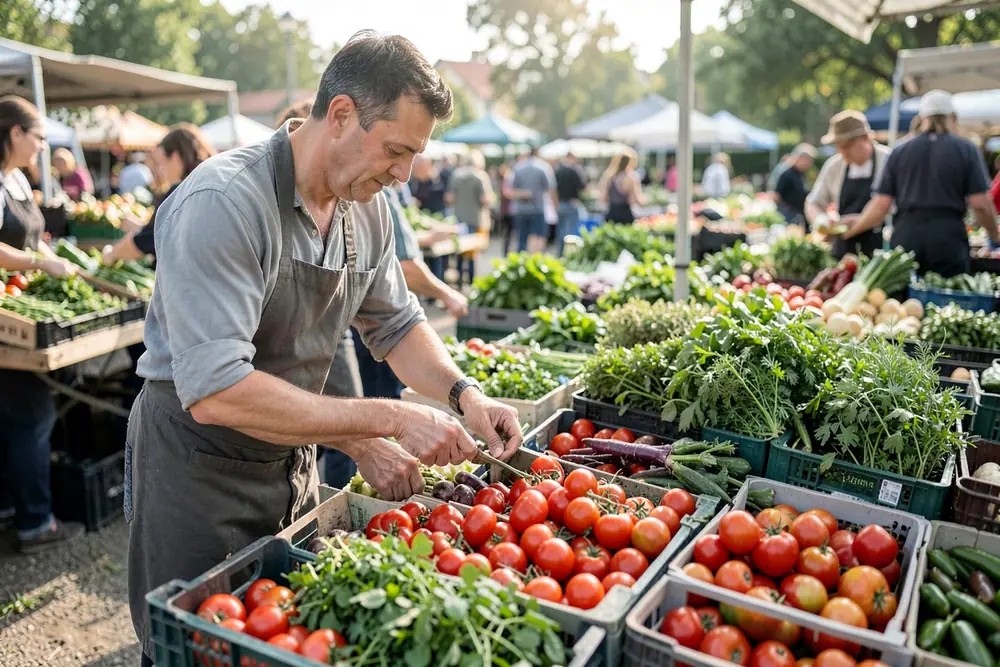
The van leaves at six and is back by nine, and the carte is written in the twenty minutes between the two. That is not a boast about speed. It is the only way a menu can be honest about what is in the kitchen: if we wrote it the night before, we would be guessing, and the market does not reward guessing.
This week the guess would have been wrong three times. The tomatoes we have been waiting on since April arrived, eight crates, from the grower who refuses to pick them before they are heavy. The broad beans were early. And a man we buy herbs from had a crate of apricots in the back of his truck that he did not want to drive home.
Tomatoes, at last
They go on the carte tonight with burrata and a basil oil, and they stay until the grower says they are done, which is usually the last week of September. For eight months of the year there is no tomato on the menu at all. People ask. The answer is that a tomato in February is a different vegetable with the same name.
A short menu is a promise that everything on it was cooked today, from something that was alive this week.
The broad beans
Early beans are small enough to leave in their skins, so they go into the risotto for a week and then, when they grow, into a purée under the lamb. By July they will be gone. That is the shape of a seasonal menu: not a list of ingredients, but a list of weeks.

The apricots nobody planned for
Mara took the crate and did not say what she would do with it. By four o'clock there was an apricot tart on the pass and a note on the board that it would be the dessert of the day until the crate ran out. It ran out on Saturday.
- Tomatoes, burrata, basil oil: on the carte until the grower calls time
- Broad beans in the risotto this week, under the lamb the next
- Apricot tart on the board until the crate is empty
If you are coming this week, the tomatoes are the reason. If you are coming next week, there will be a different reason, and we will write it on the drive back.

Elena Marsh, chef and owner
Writes the carte after the market, runs the pass every service.